Setup Access Control
To configure access control for your channel:
- Select an access control type during channel creation or from the Access Control section.
Use this when subscribers are authenticated users in Catalyst Authentication with predefined roles.
-
Select User Roles.
-
Select one or more roles from the dropdown menu.
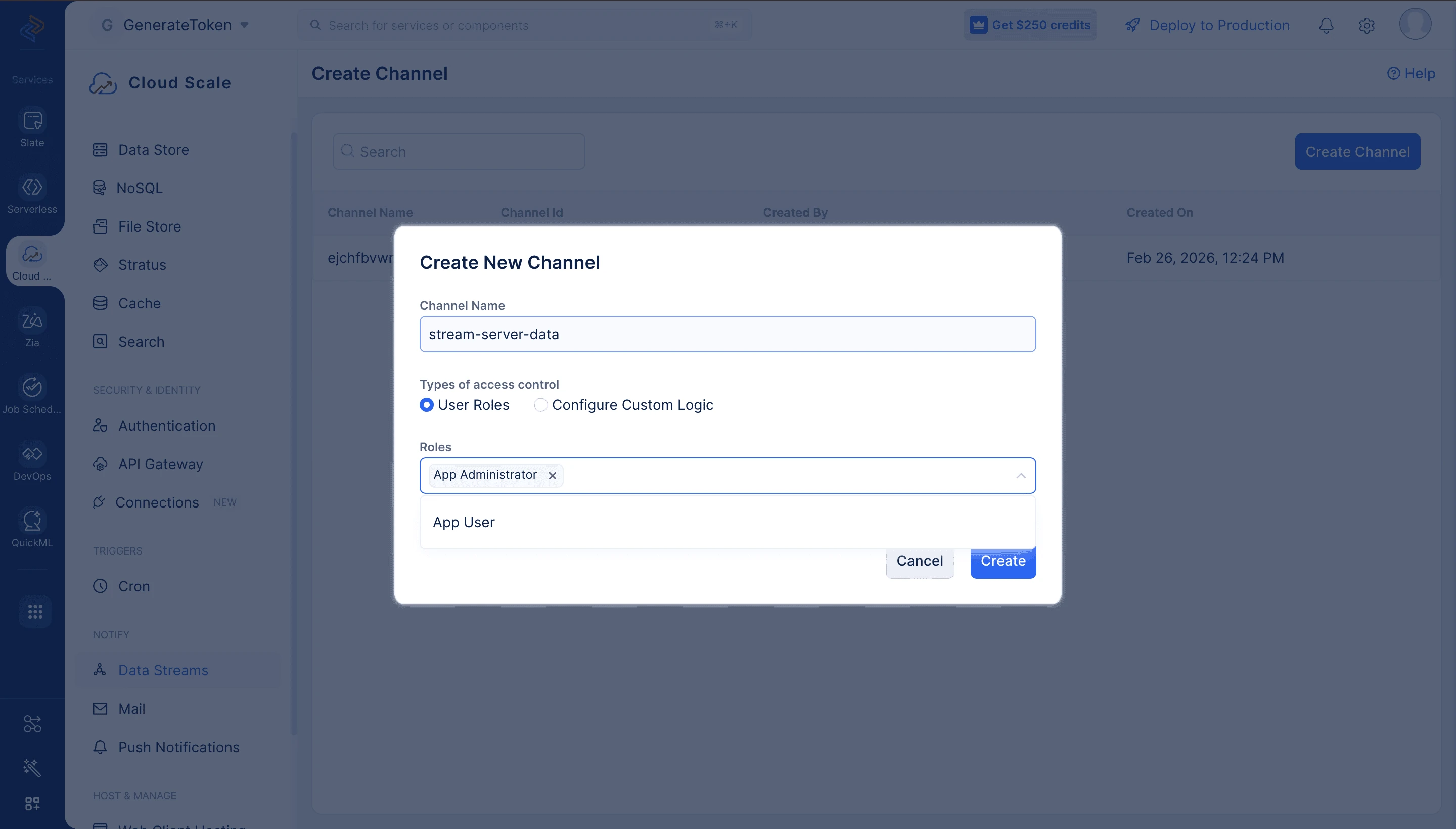
-
Click Create or Update.
Only users belonging to the selected roles can subscribe to the channel. When a role is removed, subscribers with that role lose access immediately. When a role is granted, users with that role can subscribe immediately.
Use this when you need custom authentication logic beyond role-based access (SSO, session-based connections, anonymous users, or custom criteria).
- Create an Advanced I/O function that handles subscriber authentication:
module.exports = async (req, res) => {
    const { userId, connectionName } = req.body;

    // Your custom validation logic
    const isAuthorized = await yourCustomValidationLogic(userId);

    if (isAuthorized) {
        res.status(200).json({ approved: true });
    } else {
        res.status(403).json({ approved: false, reason: "Unauthorized" });
    }
};
The function must accept connection requests, perform validation logic, and return approval or rejection.
-
Select Custom Logic.
-
Select your Advanced I/O function from the dropdown. If the function doesn’t exist, click Create new Advanced I/O function to create one first.
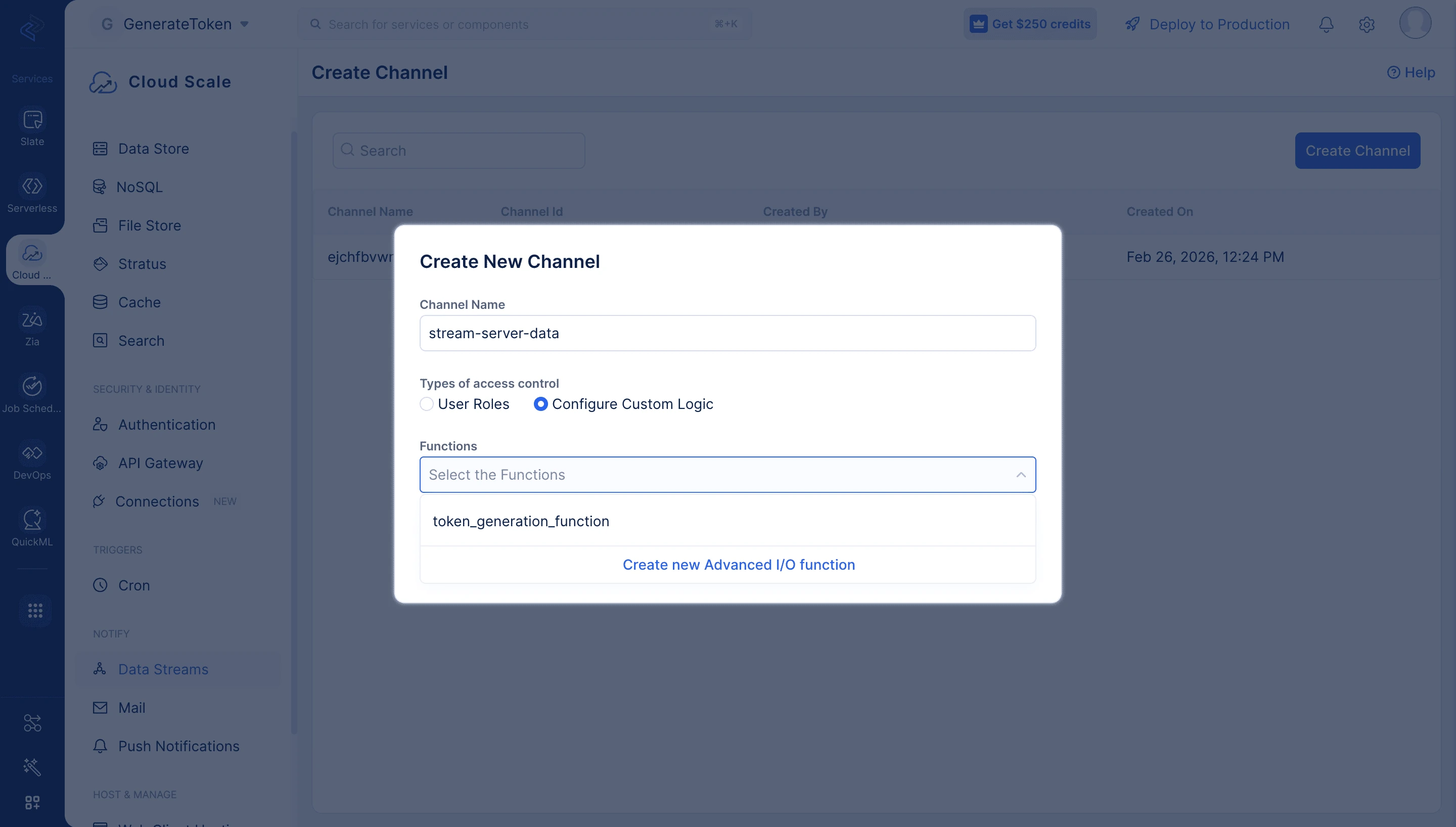
-
Click Create or Update.
Manage Subscriber Connections
After access control is configured, navigate to the Manage Connections section in the Access Control tab to view all subscribers.
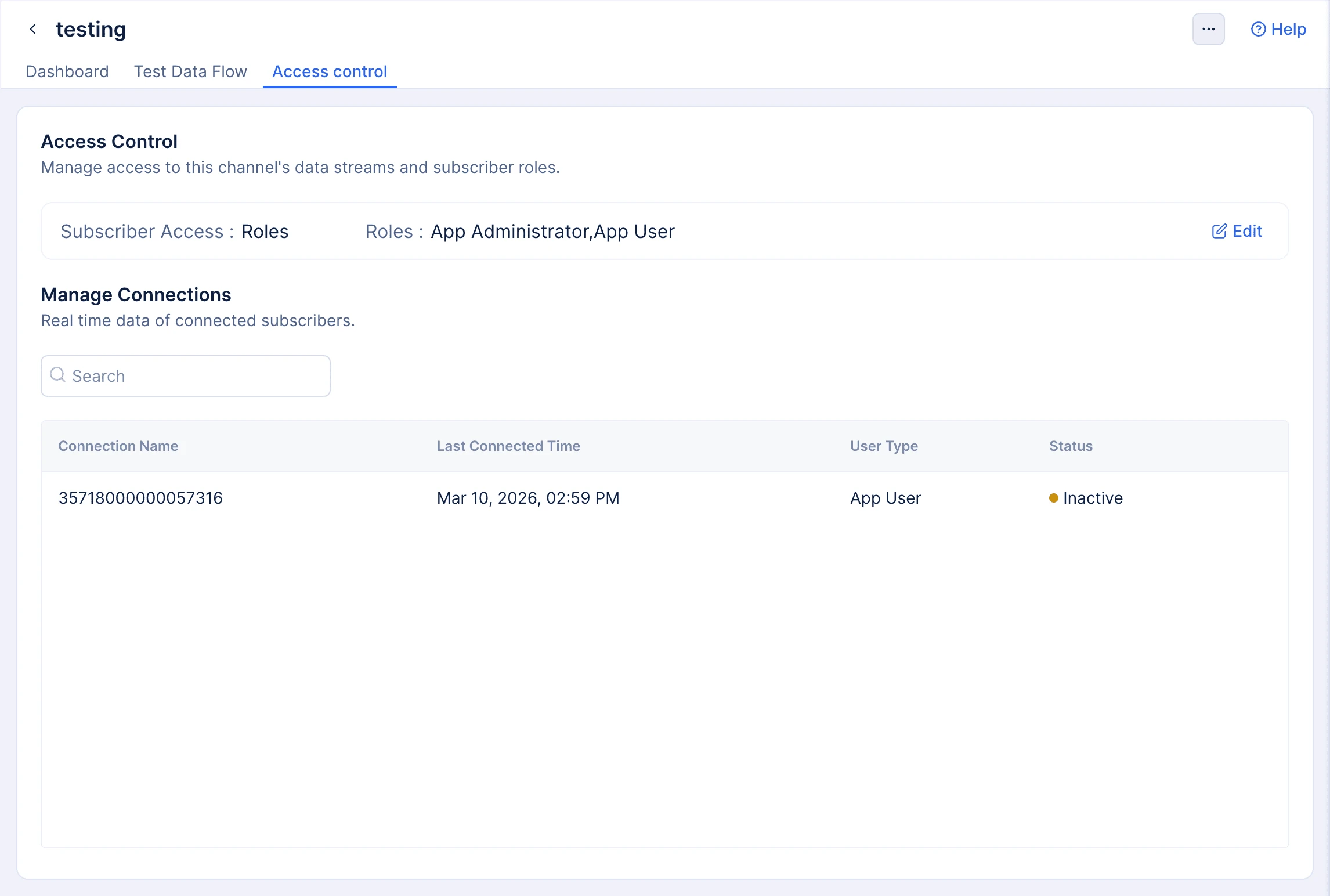
Each connection displays:
| Field | Description |
|---|---|
| Connection Name | Unique identifier for the subscriber connection (generated during token pair creation) |
| User Type | Type of user (App User or Custom User) based on access control configuration |
| Status | Current connection state: Active, Inactive, or Blocked |
To block a subscriber:
- Locate the subscriber connection.
- Click the three-dot menu icon.
- Select Block.
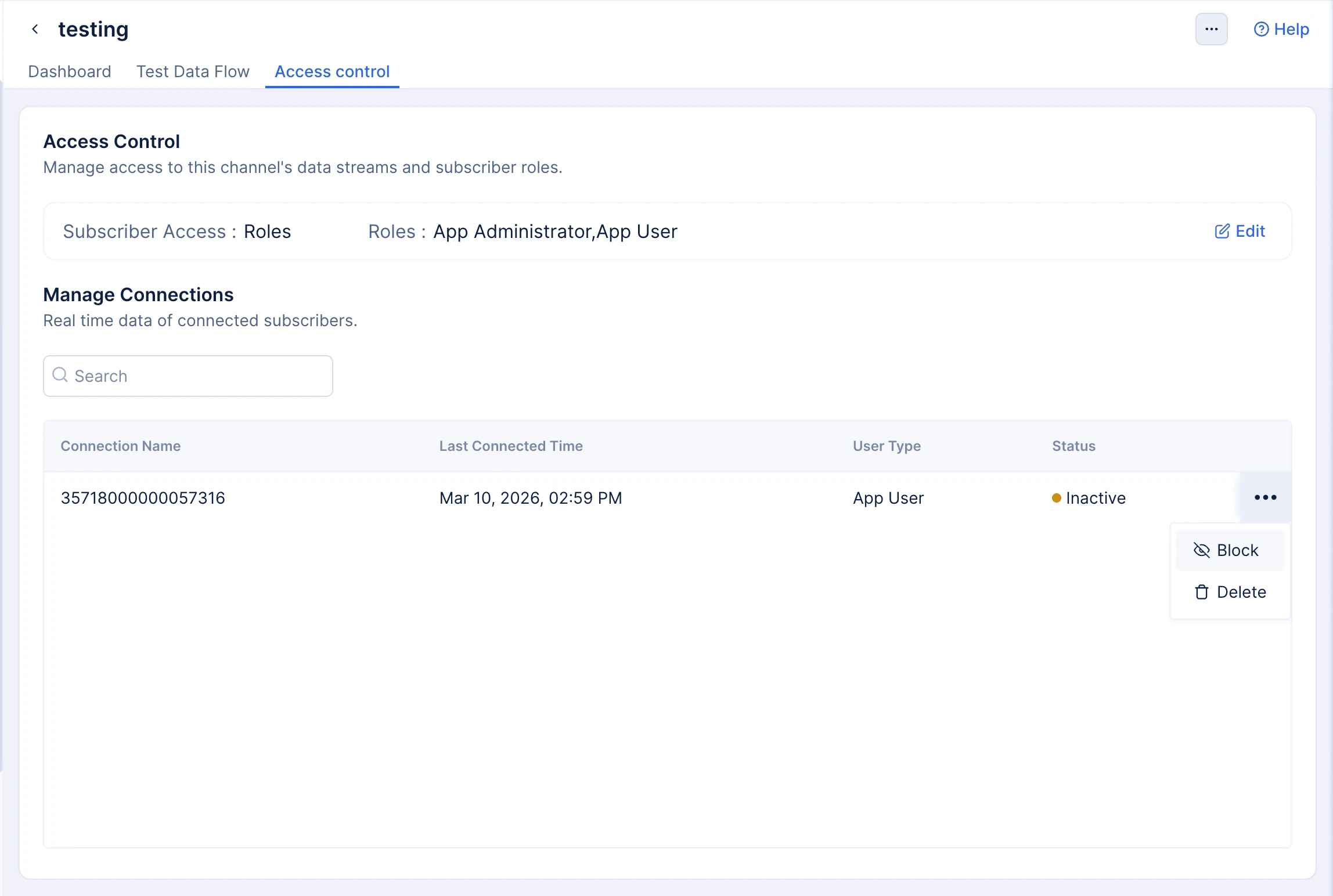
Blocking terminates the active connection immediately.
To delete a subscriber connection:
- Locate the subscriber connection.
- Click the three-dot menu icon.
- Select Delete.
- Confirm deletion in the dialog.
Last Updated 2026-10-08 12:04:32 +0530 IST
Yes
No
Send your feedback to us
 Ask ChatGPT
 Ask Claude
 Ask Perplexity